Building a Mountain Home in Jackson Hole, Wyoming
What to know about land, builders, Teton County rules and choosing an architect, from a firm that has designed on Gros Ventre Ridge.
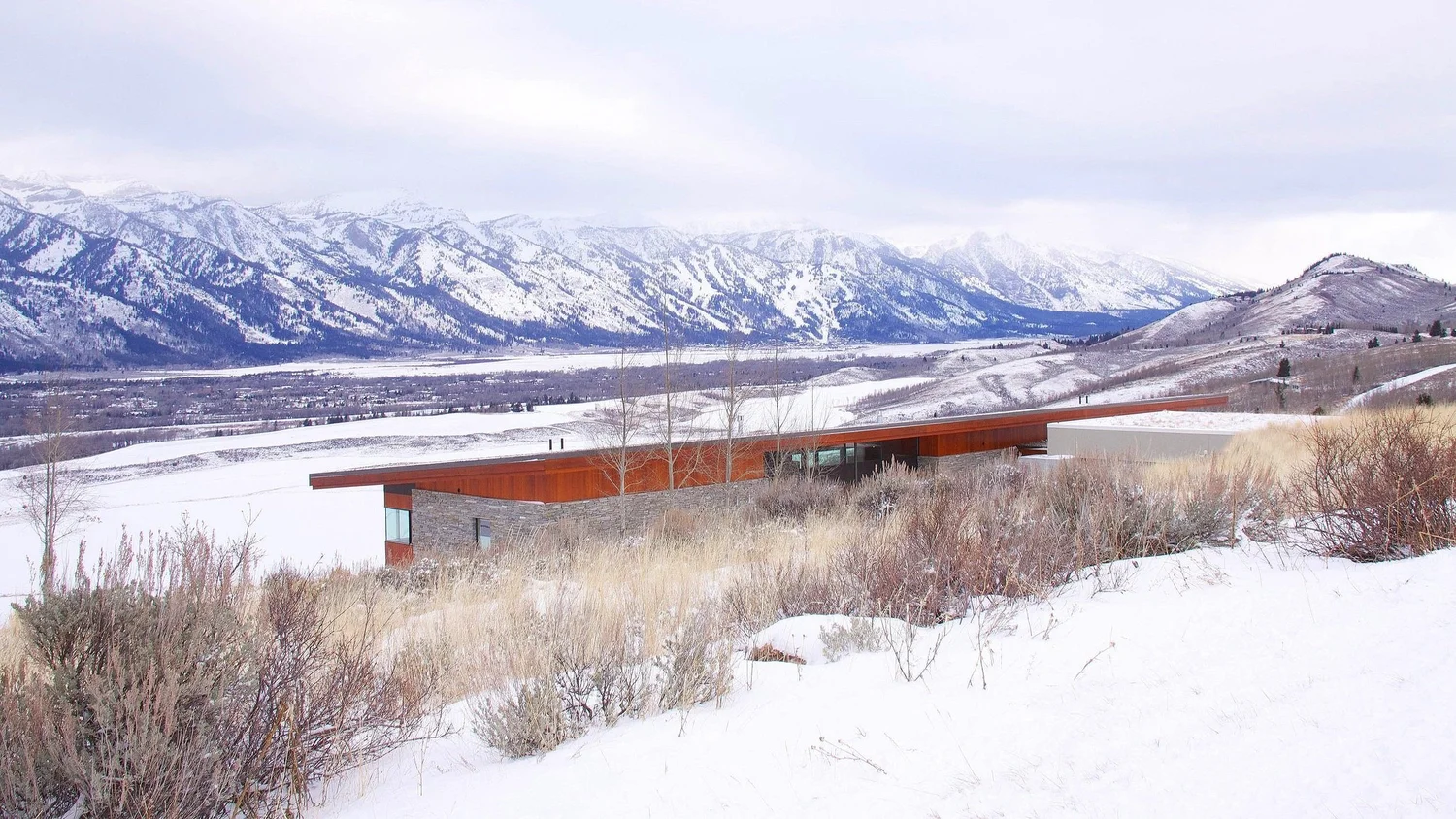
Building in Jackson Hole isn't like building anywhere else. The mountains are the reason you're there, and they also bring heavy snow, a short construction season and some of the most protective land rules in the West.
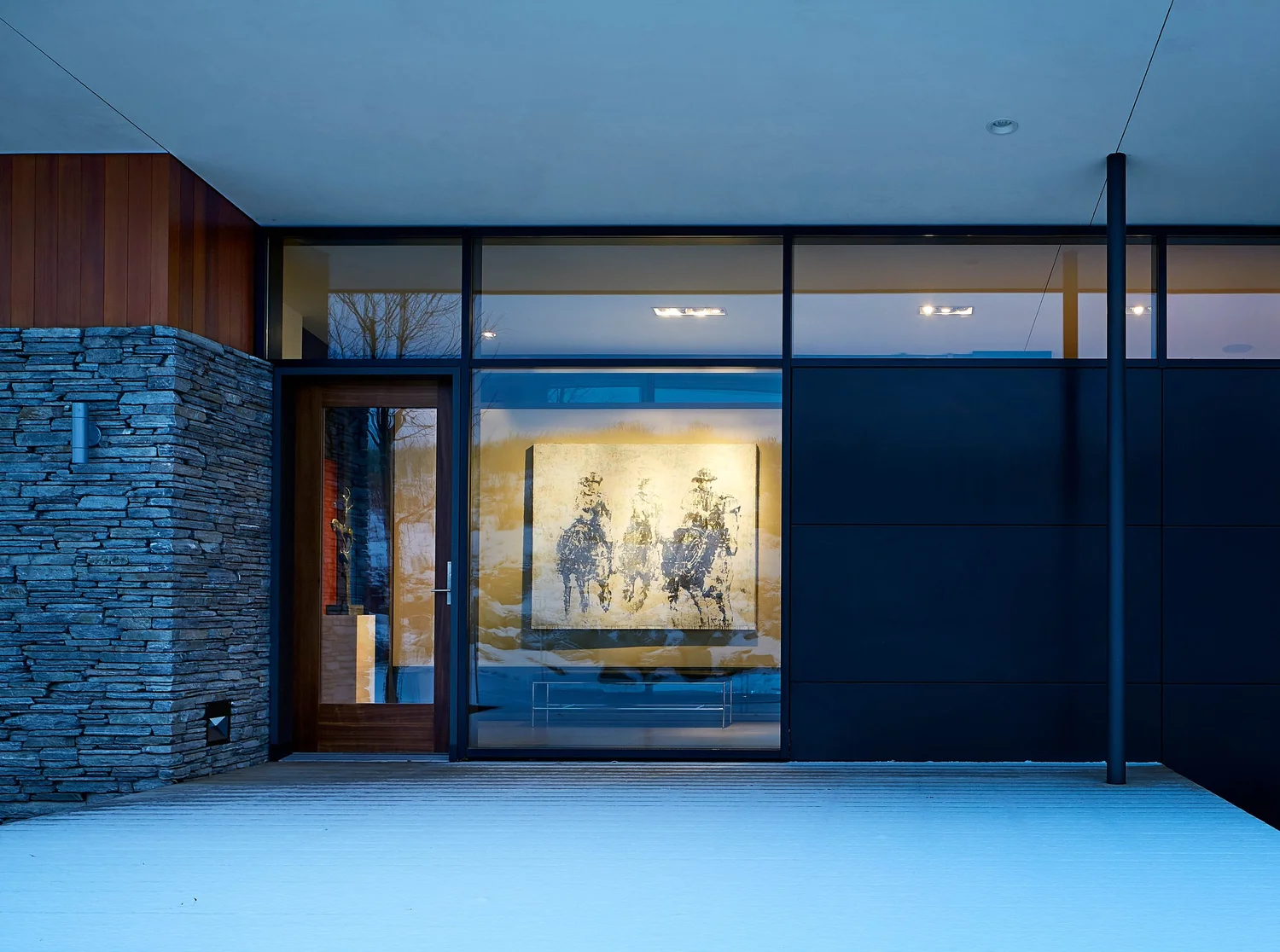
We designed Ridgeline, a home along the top of Gros Ventre Ridge with the Grand Tetons in view from every room. Here's how we walk clients through building a mountain home in the valley.
Start with the site
Roughly 97% of Teton County is national park, national forest or other public land. That leaves about 3% in private hands, which is why homesites here are scarce and priced accordingly. You aren't just buying a view. You're buying a set of conditions your house will live with for the next hundred years.
Walk the land before you buy
- Visit in winter. See where snow piles up and which way the wind comes from.
- Drive the access. A steep road that's charming in July is a different story in January.
- Ask about utilities. Many rural lots rely on a well and septic system, and both affect where the house can go.
- Check for overlays. Wildlife and scenic protections can limit where you build on the lot.
- Read the design guidelines. Many Jackson Hole subdivisions have their own architectural review.
Our advice: bring your architect out before you close. An hour on site can tell you whether the house you're picturing will actually fit.
Choose your builder early
In most places you finish the drawings and then send them out for bids. In Jackson Hole, we recommend bringing a builder in during design. The best contractors in the valley stay busy, the season is short, and having a builder at the table early keeps the design and the budget honest.
Questions worth asking
- How many homes have you built at this elevation and snow load?
- How do you work with owners who live out of state? Weekly calls, photos, an online portal?
- What's your plan for winter? What has to be done before the snow flies?
- Can we tour a finished home and talk to the owner?
Also talk through fixed price versus cost-plus. Remote sites and mountain weather make surprises more likely, so know how changes get priced before you sign anything.
Know the rules: climate, codes and what you're allowed to build
This is the part people underestimate. You'll work with two layers of rules. The building code covers how the house stands up. The land development regulations cover where it goes and how big it can be.
Climate and building code
- Snow. Teton County sets ground snow load by site, and higher elevations carry loads far beyond anything a Texas roof will ever see. Roof shape, drifting and where snow slides all get engineered.
- Earthquakes. Teton County falls in Seismic Design Category D, so the structure is designed for seismic forces.
- Frost. Footings go at least 34 inches below finished grade.
- Energy. Long, cold winters call for serious insulation and high-performance windows. Budget for both from day one.
What you're allowed to build
- The skyline rule. In Teton County, a home's roofline generally can't break the natural skyline as seen from county roads. On a hilltop lot, that often means tucking the house into the slope.
- Size limits. The county caps building size, and some lots carry tighter limits.
- Wildlife and scenic overlays. These can shape siting, setbacks, fencing and exterior lighting.
- Town or county. Lots inside the Town of Jackson follow town rules. Most other homesites answer to Teton County. Find out which before you fall for a plan.
Regulations change. Confirm current requirements with Teton County Planning & Building or the Town of Jackson, or have your architect handle it during due diligence.
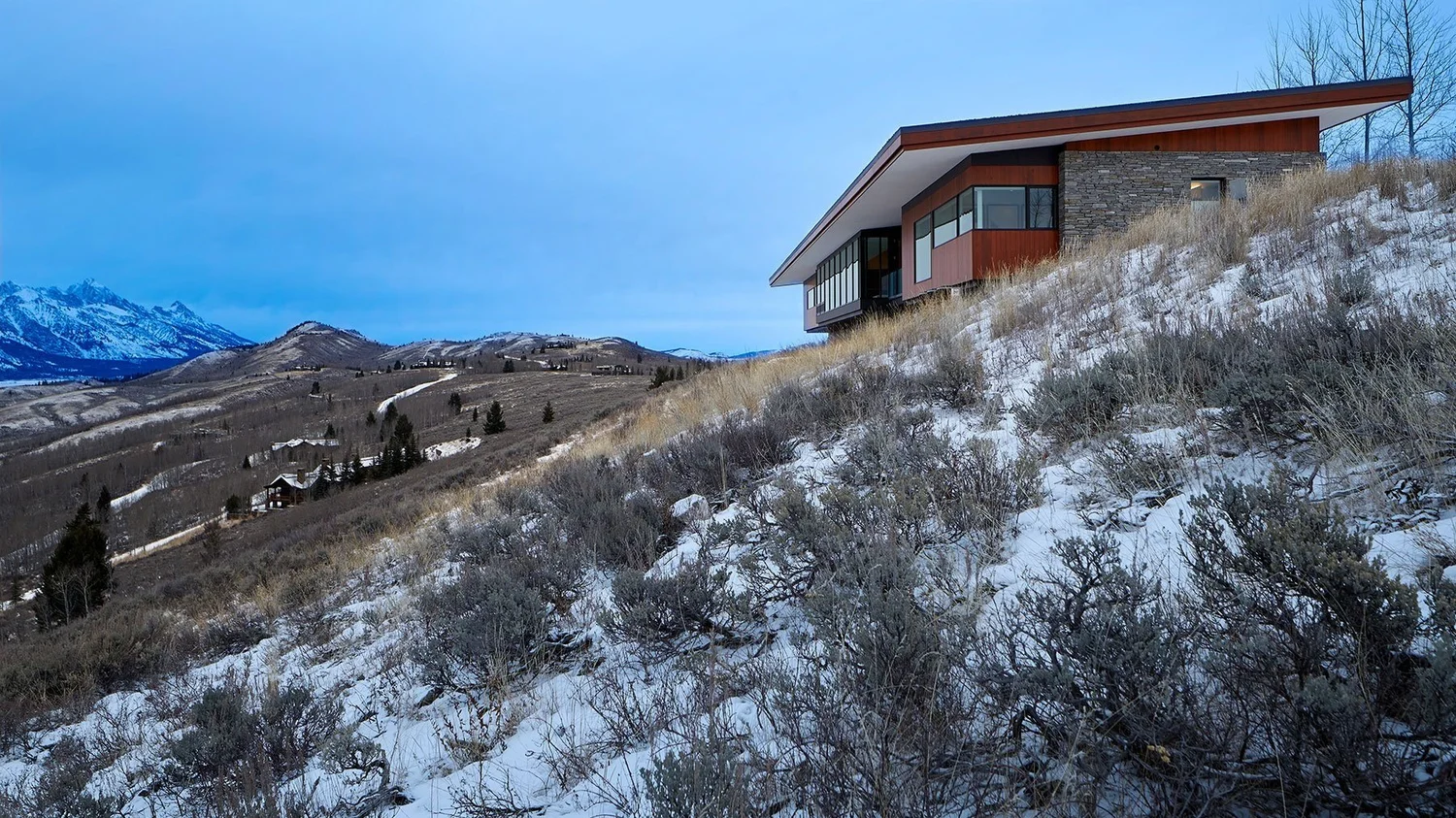
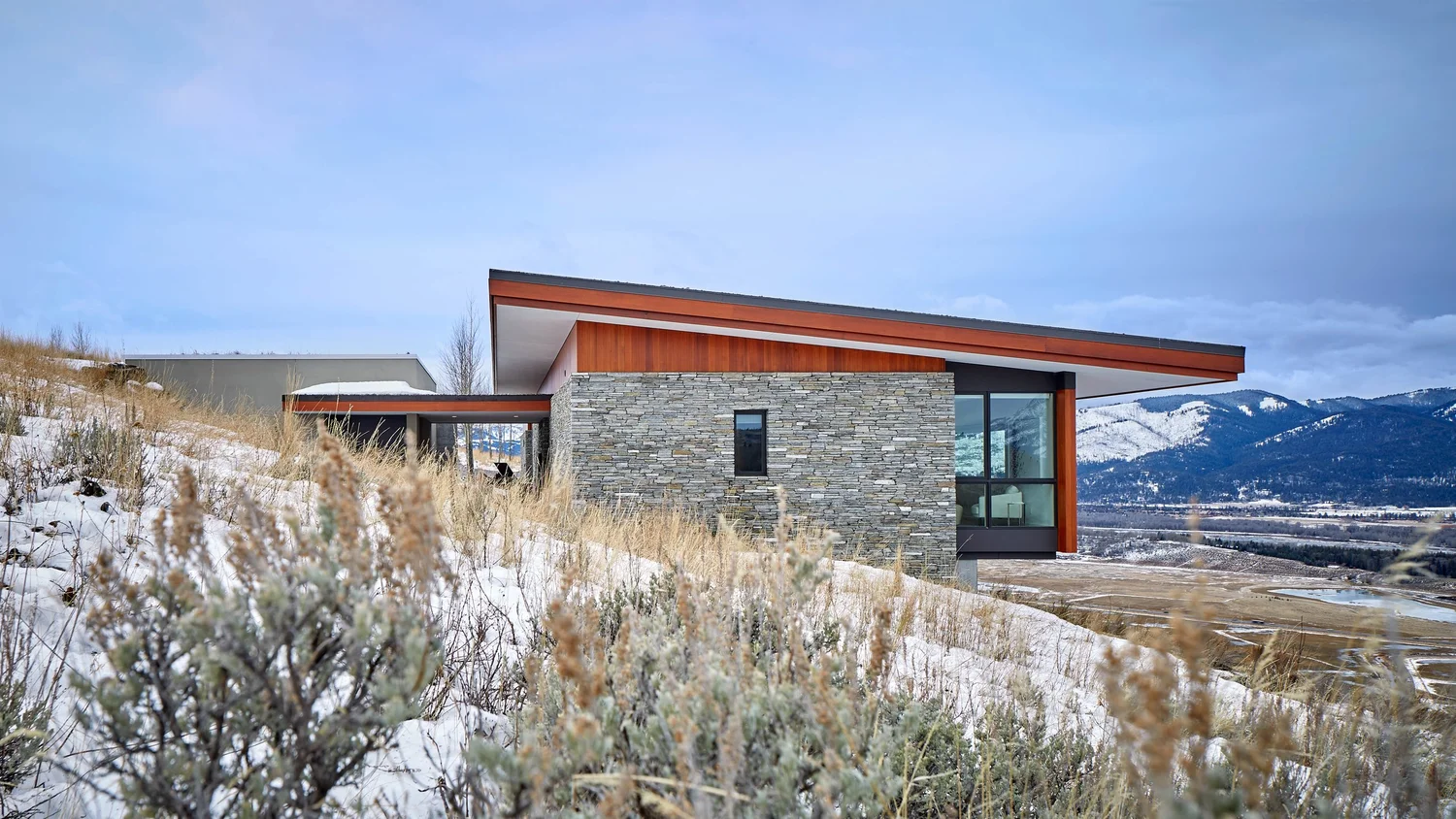
At Ridgeline, the rules made the design better. The house stays on one level and close to the ground. The garage is built into the hill. The roofline follows the slope and shelters the house from western sun and driving snow, and a green roof lets sage, grasses and wildflowers take the site back over time.
“The singularity of the simple mark on the land.” Peter Waldman, AIA, on Ridgeline
Hire an architect who knows the mountains and knows you
Here's something people don't always expect to hear: your architect doesn't need to live in Jackson Hole. What matters is that they understand how to build there, and that they understand how you live.
Why work with an architect close to home
- You can sit down together. Design is a long series of conversations. Most of ours happen face to face in our Dallas studio, not on a choppy video call.
- We already know your life. How your family uses a house, how you entertain, what you'd change about the home you're in now. That carries straight into the mountains.
- We're on your side of the table. We coordinate the Jackson builder, the engineers and the county reviews, and we're on site at the milestones that matter.
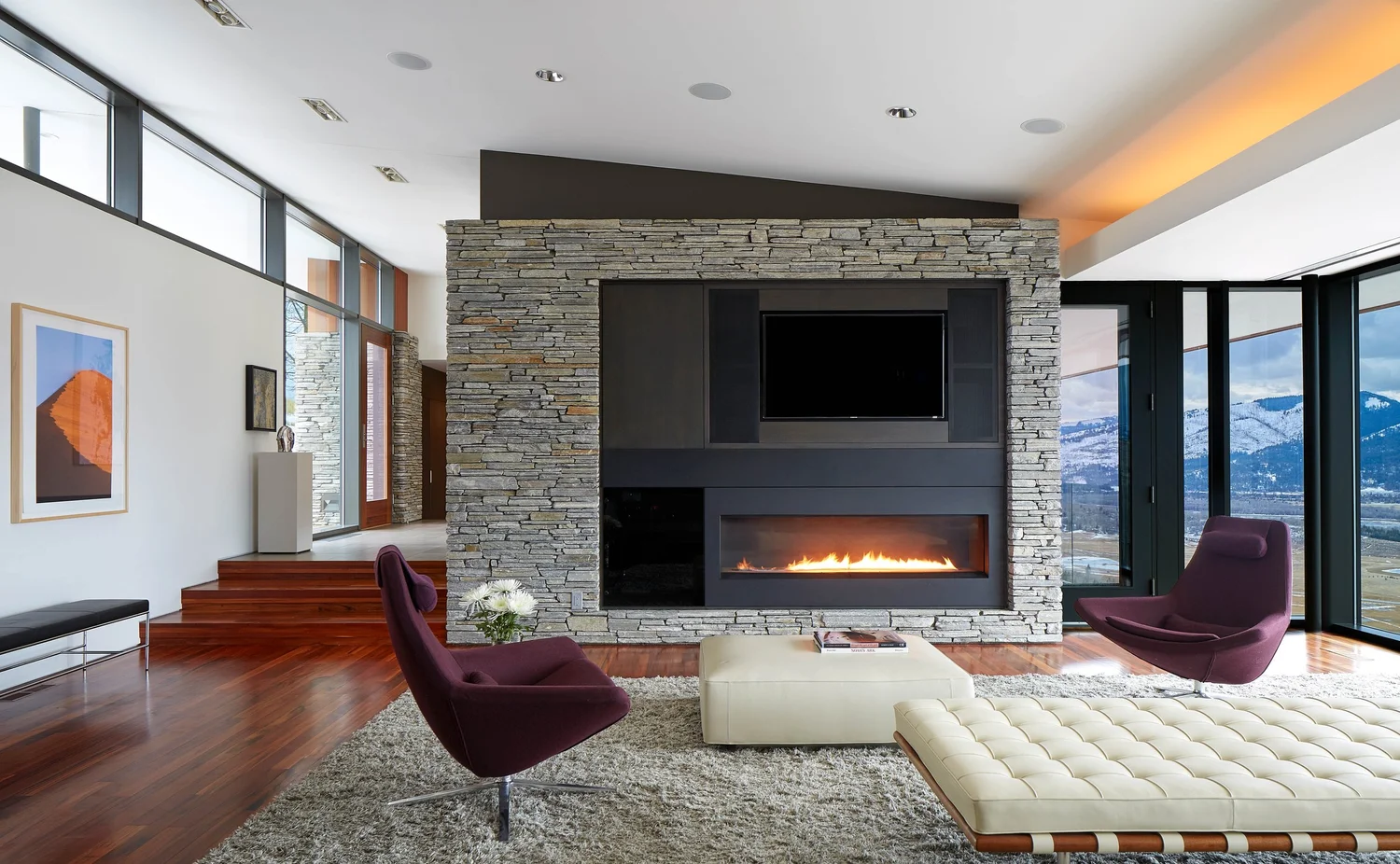
- You get a design, not a default. A lot of mountain homes end up looking like lodges. Ours are modern, quiet and built around the view.
Ridgeline is the proof. Designed in Dallas, built on Gros Ventre Ridge, and recognized with a PaperCity Design Award along with features in Texas Architect, LUXE and Western Art & Architecture.
Thinking about Jackson Hole?
Tell us about your land, or the land you're considering. We'll talk through what's possible before you commit to anything.
Frequently asked questions
Do I need an architect based in Jackson Hole to build there?
No. You need an architect who understands Teton County's snow loads, building code and land development rules, working alongside a local builder and engineers who know the valley. We designed Ridgeline on Gros Ventre Ridge from our Dallas studio.
How long does it take to build a custom home in Jackson Hole?
Two to three years from land purchase to move-in is common for a custom home. Design and county approvals take several months, and the short mountain building season stretches construction.
What snow load does a house in Jackson Hole need to handle?
It depends on the site. Teton County determines ground snow load by location and elevation, and higher sites carry much heavier loads. Your structural engineer uses that number to design the roof, including drifting and snow sliding.
What is the skyline rule in Teton County, Wyoming?
Teton County's land development regulations generally require that a home's roofline not break the natural skyline as seen from county roads. On ridge and hillside lots, that usually means setting the house lower on the site or into the slope.
Is my lot governed by the Town of Jackson or Teton County?
Parcels inside town limits follow the Town of Jackson's rules. Most other homesites in the valley, including Wilson and rural areas, fall under Teton County. Teton Village also has its own resort master plan. Confirm which applies before you design.
When should I hire an architect for a Jackson Hole home?
Before you buy land, if you can. A site visit with your architect can reveal snow, access, skyline and utility issues that change what a lot is worth to you.
Does WELCH Architecture design vacation homes outside Texas?
Yes. We're based in Dallas–Fort Worth and design custom homes across the United States, including Ridgeline in Jackson Hole and a range of lake and mountain retreats.